


Overview
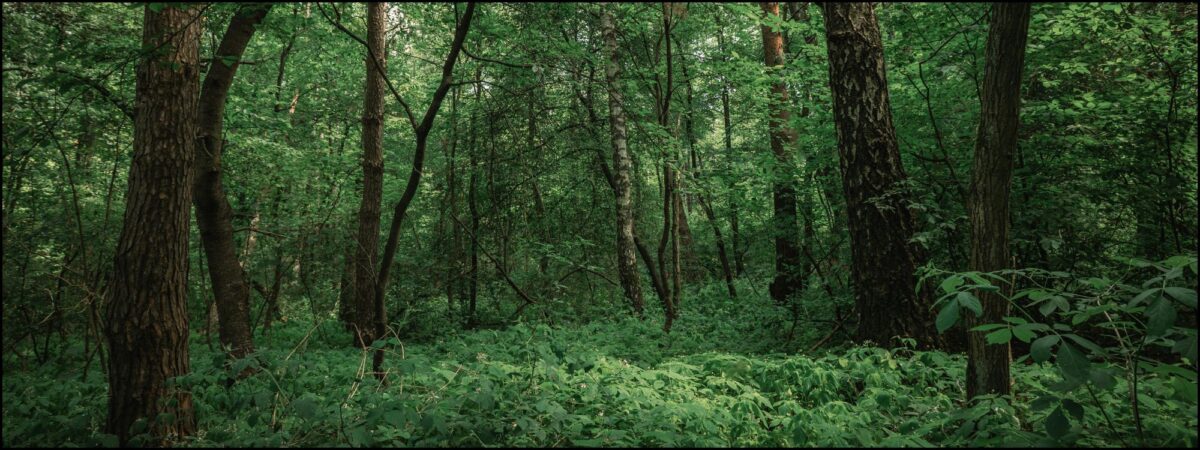
The climate of an area is linked to the types of habitats one can see there. A hot, dry climate allows desert habitats to form, warm and moist climates create forests and meadows, and hot and wet climates allow rainforests to flourish. These habitats are the homes of many animals, and if something changes or eliminates a habitat, the animals who live there are forced to find another place to live or perish. A changing climate can change habitats, impacting the animals living there. Some habitats are very unique and endangered species face extinction if their habitats change drastically.
Introduction
This activity looks at how climate, habitat, and endangered species are all related.
Grade Level
K-5, 6-8
Learning Objectives
Students will be able to describe how animals, plants, and their climate are related to one another.
Lesson Format
This activity can be done indoors!
Time Required
1-2 Hours
Credits & Contact Info
Trisha Smrecak and Caroline Boyajian
Paleontological Research Institution, 1259 Trumansburg Rd., Ithaca NY 14850
climate@priweb.org
Instructions & Materials
Materials
- 12 pieces of paper for habitats
- animal cards for each individual (download here)
- small rewards, like candy
Preparation
- On each sheet of paper, draw (or have youth create) each of the 12 scenes below, being sure to label what each habitat scene represents. Alternatively, you may wish to use hula hoops or other types of markers simply labeled with each habitat, as youth will be using these as safe spaces for the game. - Meadow, Mountains, Lakes, Forests, Urban areas, Suburban areas, Deserts, Underground, Rivers, Rainforests, Arctic, Oceans
- Print off animal cards for each participant. You may choose to laminate them for multiple uses.
- Distribute the habitat scenes throughout a large room, or in an open area of grass, to be safe spaces for the game.
- Place the small reward or goal in a pile in one corner of the room or field.
Instructions
- Give each participant an animal card (there are 7 different animals, but multiple youth can play the same animal if necessary).
- Explain that each animal is an endangered species on the planet that has a backyard just like each of us. Their backyard is their preferred habitat, or ‘ideal’ habitat. They can also survive in ‘stressed’ habitats, but it is not where they prefer to live. Just like people from Arizona can live in Alaska, it is a habitat they are not accustomed to, and might not have the right clothing for, but that they can survive in. Sometimes this puts them at a disadvantage (like having to buy scarves and jackets to survive). There are also places where the animals on the cards cannot live. A bird cannot live underground, and a bear can’t live in the city. Why can’t the animals on your cards live everywhere? They have adapted for a particular climate, and to a particular habitat. If the climate in their backyard habitat changes their environment, they must find a new habitat in which they can survive.
- Tell youth to look at their animal cards. Where are their ideal habitats? Their stressed habitats? Where can’t their animal live?
- Tell youth that they must cross the room or field, retrieve their prize (candy bar, etc.), and return. They may use habitats as safe spaces, but they cannot use habitats that their animals cannot survive in. Also, if they use a ‘stressed’ habitat, they must hop on one leg until they have been in an ‘ideal’ habitat safe space again.
- The person playing the Climate Tagger may tag anyone not in a safe space. Once tagged, youth must go to the sidelines.
- Once everyone has retrieved their prize or been tagged, a new round can begin. Take someone who was previously an animal and make them a Climate Tagger, as well. Explain that with the new Climate Tagger, we have changed climate, and it will be harder for animals to find habitats to survive. Repeat the game by removing habitats entirely, increasing the space between habitats, or changing the number of taggers. Ask youth what those changes might mean in the real world.
Discussion
A changing climate means more than just warmer weather. When the global climate experiences a change, it is felt differently in different places and by different organisms. For instance, warmer weather will negatively affect many organisms’ habitats in forests, where different trees and animals can live once it becomes warmer, creating more competition for food and shelter, and forcing less successful animals to find a new place to live. Animals with habitats in mountains feel the same pressure. If they prefer to live above the tree-line (the highest place on a mountain that trees can grow healthily), and it becomes warmer, the trees can grow healthily higher up the mountain and reduce the space in which animals who live above the tree line can live. Once the tree line migrates all the way up the mountain, there is nowhere else for the animals to go. You saw this if you removed habitat safe spaces during the game.
Animals aren’t the only ones affected by a changing climate. If a community of humans lives on growing a certain kind of crop, and that crop can no longer grow in that area, the community will either have to adapt to growing a new crop, or move to where their crop can grow well. Both moving and changing crops can have impacts on other animals living in the area.
These are just two examples of how organisms must adapt to changing environments as a result of a shifting climate. When we added more Climate Taggers into the game, it became harder to make it from safe space to safe space. This shows how animals, including humans, have a hard time adapting to climate change when it is happening rapidly. With one Climate Tagger, it was easy to avoid being tagged; with 3, it became much harder. The faster climate changes, animals have a harder time adapting, and it is much more likely that they can become extinct or endangered. What do you think your animal would do if the climate changed dramatically?
Extensions
CoCoRaHS Extension Ideas:
Learn about an aspect of ecology in your community. Is a certain type of animal threatened or endangered? Is a certain type of animal particularly numerous and causing problems (mice or insects spreading disease)? Does the climate in your region play an active role in further threatening or increasing species’ numbers? (Habitat deconstruction can decrease frog populations, allowing mosquito populations to increase. Mosquitoes thrive in warm, moist environments, and temperature increases can increase the health of mosquito populations.) Conduct a summer project to learn more!