


Overview
As a community, we do different things to survive in our regional climate. People in warm climates use air conditioning, dress in light colored clothing, paint their houses light colors, and roof their houses with light-colored roofing material. In cooler climates, people have to learn how to live with precipitation when it falls as snow or when rain freezes to the ground. Commonly, salt is placed on our roads and driveways to prevent slipping on ice. Salt is also abundant in ocean water, and oceans control the climate of many different regions, whether they are in our backyards or not.
Introduction
This activity explores the science behind the effect salt has on changing the physical properties of water, which also helps people adapt their lifestyles to their surroundings.
Grade Level
K-5, 6-8
Learning Objectives
Students will be able to assess the effects of salt in water, specifically its ability to change the freezing point of water and other solutions.
Lesson Format
This activity can be done indoors!
Time Required
20-30 min
Credits & Contact Info
Trisha Smrecak and Caroline Boyajian
Paleontological Research Institution, 1259 Trumansburg Rd., Ithaca NY 14850
climate@priweb.org
Instructions & Materials
Materials
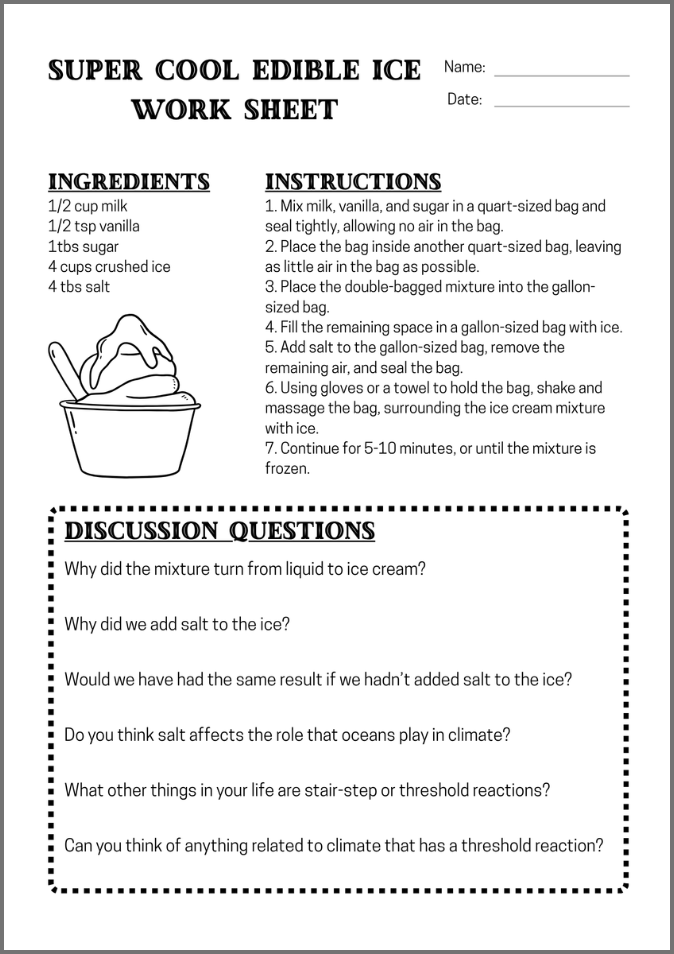
- 1/2 cup milk
- 1/2 tsp vanilla
- 1tbs sugar
- 4 cups crushed ice
- 4 tbs salt
- 2 quart-sized Ziploc bags
- 1 gallon-sized Ziploc bag
- Hand towel or gloves
- Super Cool Edible Ice worksheet
Instructions
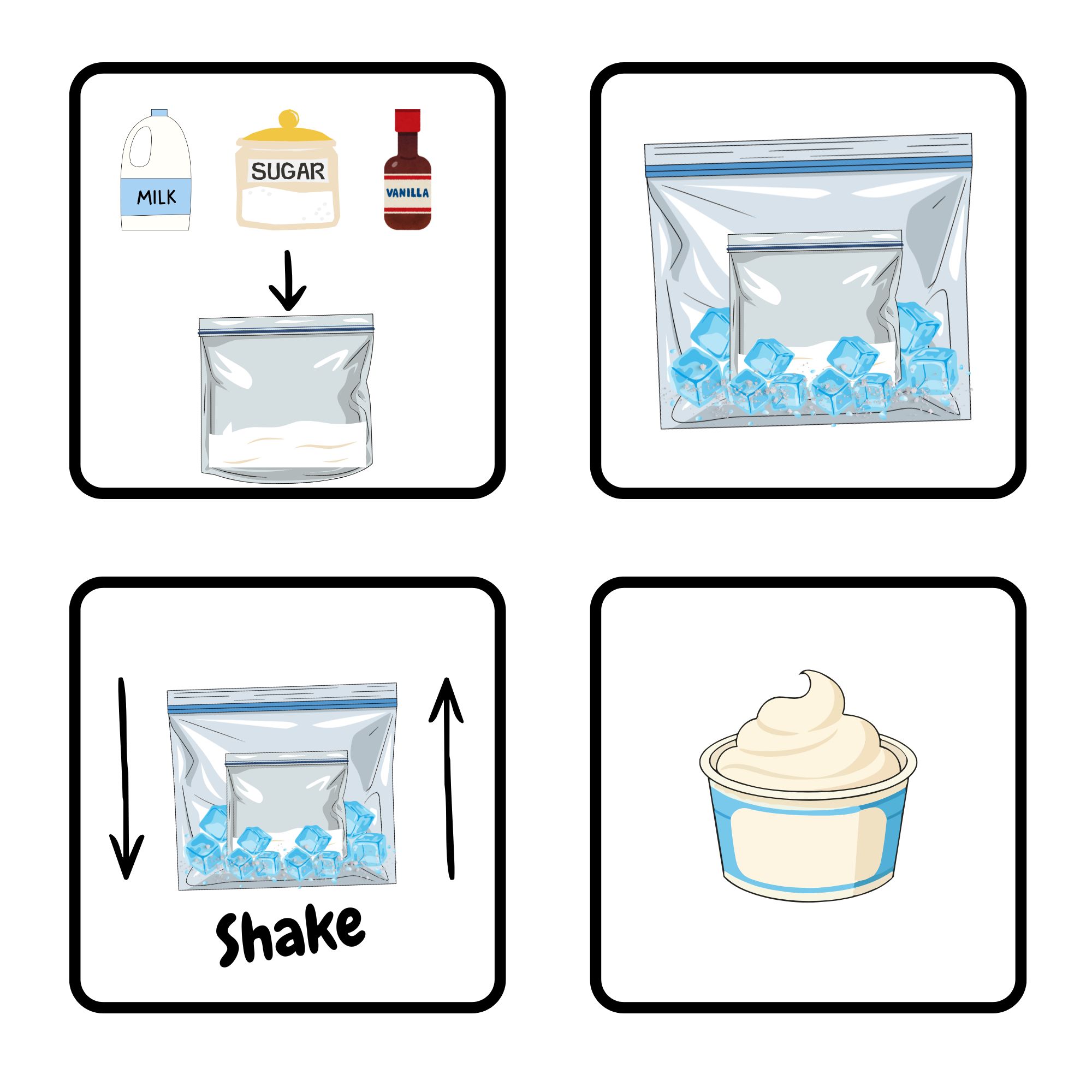
- Mix milk, vanilla, and sugar in a quart-sized bag and seal tightly, allowing no air in the bag.
- Place the bag inside another quart-sized bag, leaving as little air in the bag as possible.
- Place the double-bagged mixture into the gallon-sized bag.
- Fill the remaining space in the gallon-sized bag with ice.
- Add salt to the gallon-sized bag, remove the remaining air, and seal the bag.
- Using gloves or a towel to hold the bag, shake and massage the bag, surrounding the ice cream mixture with ice.
- Continue for 5-10 minutes, or until the mixture is frozen.
Discussion
Why did the mixture turn from liquid to ice cream? Why did we add salt to the ice? Would we have had the same result if we hadn’t added salt to the ice? Salt allows the ice to melt at a temperature cooler than 32°, which is needed to cool the cream enough to make ice cream. Think about a lake in comparison to an ocean. What is similar about both of them, and what is different? Do you think salt affects the role that oceans play in climate?
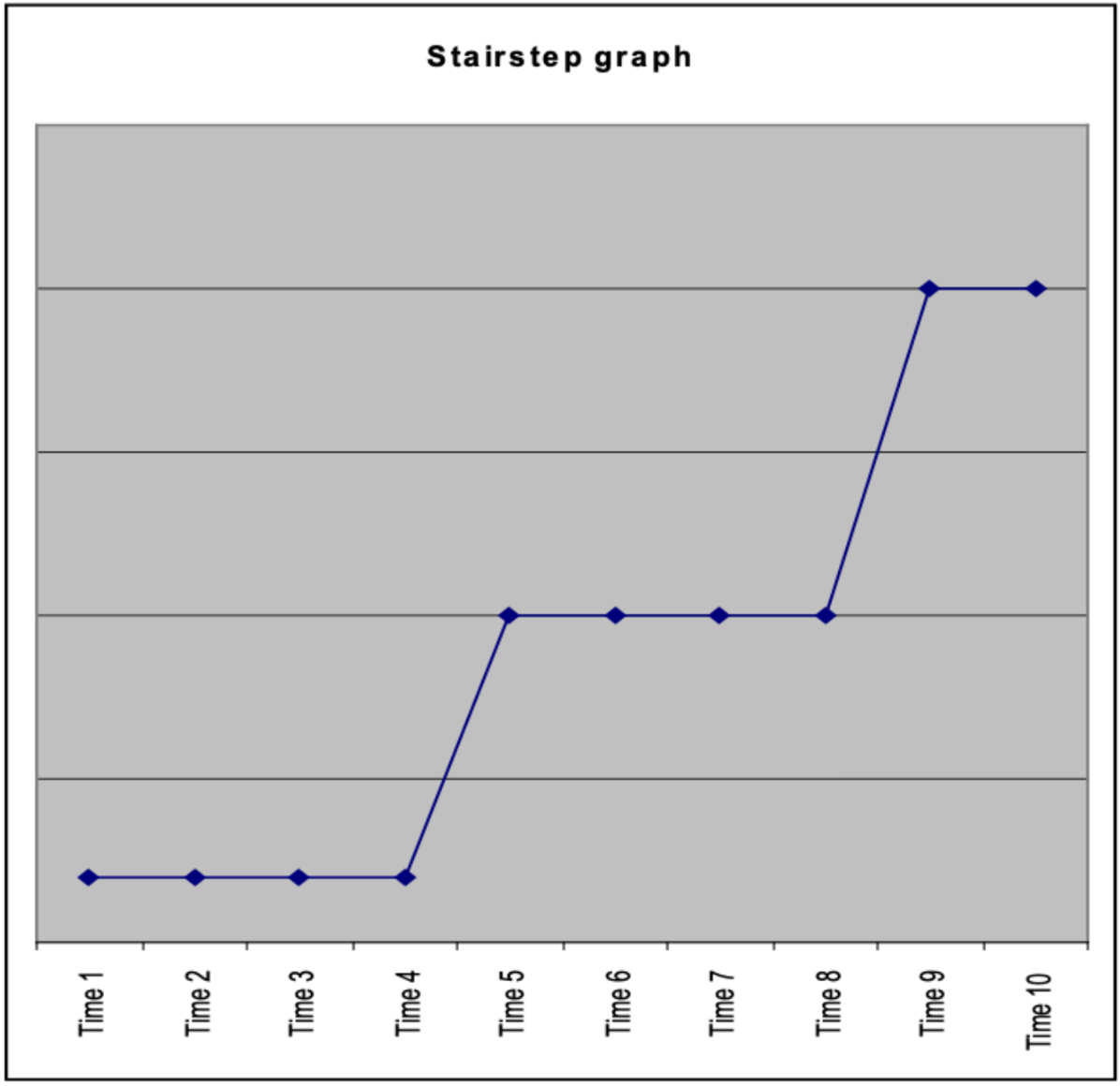
What is so unique about water? It can be a solid, a liquid, or a gas. It changes state from a solid to a liquid when it gets above 32° Fahrenheit, and from a liquid to a gas when it reaches the boiling point, 212° Fahrenheit. This is a threshold, or stair-step, reaction. At 31°, a piece of ice isn’t any more likely to melt than at 30°, but once it hits 32°, it melts. When the ice reaches a threshold temperature, it reacts, but not before then.
What other things in your life are stair-step or threshold reactions? Can you think of anything that is related to climate that has a threshold reaction? Answers could include glacial motion, clouds turning to rain, the tree line on a mountain, and the lack of vegetation in a particularly shady area next to an area with some exposure. All of these have threshold points beyond which they are not successful.
Water freezes at 32° Fahrenheit, making roads dangerous on cold days. When we put salt on the roads, it lowers the freezing point of water, effectively turning the ice on the roads into water. We used the same process to make our ice cream. When we lower the freezing point of the ice by adding salt, we allow the ice to turn to water while remaining below the freezing point. This allows the ice cream mixture to be supercooled from the ice, turning into supercooled water and flowing around the full bag of ice cream.
Think about our roads again. Is there a situation in which salt is not effective in helping our community with icy roads and driveways? Yes, when it is much colder than 32° outside, adding salt lowers the freezing point, but not enough to make the ice turn into water. During these instances, sand is a much more effective melting agent, as its dark color absorbs heat from the Sun to induce ice melt.
Discussion Questions:
- Why did the mixture turn from liquid to ice cream?
- Why did we add salt to the ice?
- Would we have had the same result if we hadn’t added salt to the ice?
- Do you think salt affects the role that oceans play in climate?
- What other things in your life are stair-step or threshold reactions?
- Can you think of anything related to climate that has a threshold reaction?
Teaching Tip
Keep in mind student allergies and dietary restrictions.
Extensions
CoCoRaHS Extension Ideas:
Salt is not the only thing that can more rapidly melt ice on our roads and driveways; sand is also frequently used. Sand is dark in color, which absorbs more sunlight and therefore increases the speed of ice melt. It is also a coarse surface for shoes and wheels to grab onto. The next time you have an icy driveway, cover part of it with salt and part of it with sand. Which is more effective? Is there a time when each could be more effective than the other? Why or why not?