


Overview
What happens to materials like metal, concrete, and air in a balloon when they're heated? They expand and take up more space.
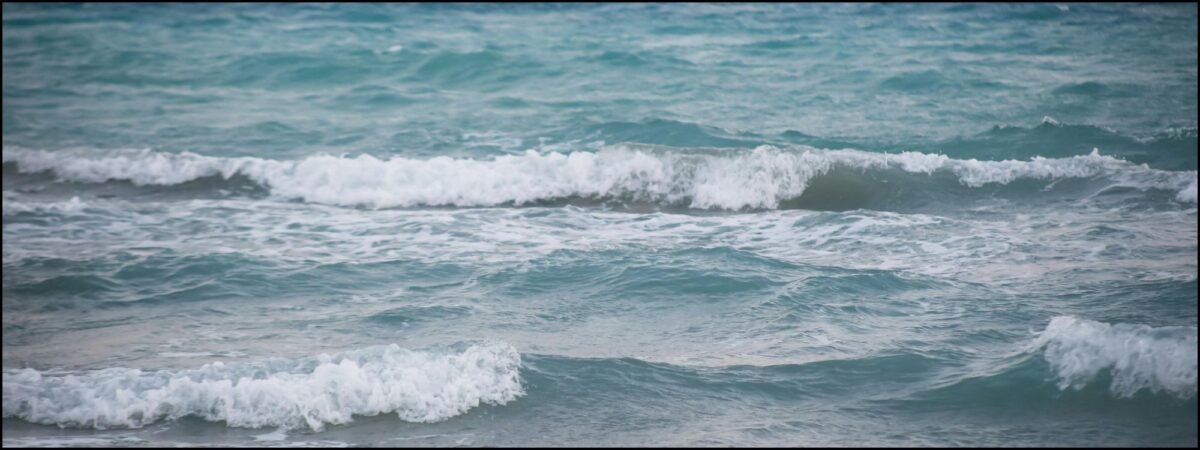
What we do in our own communities can impact the world's oceans. If the global air temperature increases, the ocean absorbs heat energy and the ocean temperature increases, too. Then the ocean expands and rises up.
Introduction
This activity explores what happens to water as it is heated and cooled.
Grade Level
K-5, 6-8
Learning Objectives
Students will be able to describe that ocean levels have risen and fallen historically, and what can cause this to happen.
Lesson Format
This activity can be done indoors!
Time Required
1 Hour
Credits & Contact Info
Trisha Smrecak and Caroline Boyajian
Paleontological Research Institution, 1259 Trumansburg Rd., Ithaca NY 14850
climate@priweb.org
Instructions & Materials
Materials
- Large container for water which can tolerate being heated (a coffee pot works well)
- Cold water
- Ice cubes
- Salt
- Masking tape
- Source to heat water
Instructions
- Make an ‘ocean’ by filling a glass container with water and adding a pinch of salt.
- Mark the water level with a small piece of masking tape.
- Explain to youth that the water is ‘sea level,’ and you are going to look at what makes sea level rise.
- Add at least 8 ice cubes to the container and allow them to melt naturally. As they are melting, explain that these represent ice that has broken off of glaciers and ice sheets and fallen into the ocean. When this happens, the ice melts and raises the ocean water level. If the ice had stayed on land, there would be no water level rise.
- Mark the water level after the ice cubes have melted. Is it higher or lower than the old water level, and why?
- Explain that as the climate heats up, so does the water on the globe, both in our experiment and in real life.
- Warm the water slowly, taking care not to boil it (which will create steam and reduce the water level).
- Mark the new sea level.
Discussion
Earth’s oceans play a crucial role in the heating and cooling of the places in which we live. They’re also a great tourist attraction, and many people have built their homes along the shorelines. However, just like on land, the oceans are affected by the climate, and when climate shifts, it creates a change in the ocean landscape. If the climate gets dramatically cooler than it is now, much of the Earth’s oceans freeze near the poles and eventually create glaciers that can travel over land, covering places like Canada and the northern United States almost entirely. We call this an icehouse climate. The ocean recedes from the shoreline during these times, because the water is trapped in ice, and more beaches become exposed. This would leave residents who built their houses on ocean shores, no matter how close or far away from glaciers they are, much further away from the coastline than they were.
If the climate gets dramatically warmer than today, the water that is stored in glaciers at our poles can melt. In our activity, when we melted our ice cubes, the sea level rose slightly. In the Earth’s oceans, if the glaciers melt, the sea level rises globally. Further, when the oceans’ temperatures rise, thermal expansion occurs. This is when the water heats and takes up a little more room than it did when it was cool. For a few water molecules, this would go unnoticed, but in the activity there was enough water to cause a small shift in the sea level of your ‘ocean.’ On a global scale, you can imagine how much thermal expansion could raise the water level. When the water level has risen, all of the people who have built their homes on the sea shore will have lost their beach and would be wading in their house!
Background
Sea level rises in a warming climate for two reasons: 1) freshwater from land entering the ocean, either as icebergs which eventually melt or as liquid freshwater that melts from glaciers and ice sheets and runs off into the ocean, and 2) expansion of warming ocean water. In this experiment, we used ice cubes to simulate ice that had been on land, broken off, and fallen into the ocean, as icebergs do.
Data show that "the International Panel on Climate Change (IPCC) concludes that ice loss was the largest contributor to sea-level rise during the past few decades, and will contribute to rising sea levels for the century to come." [NASA Understanding Sea Level]
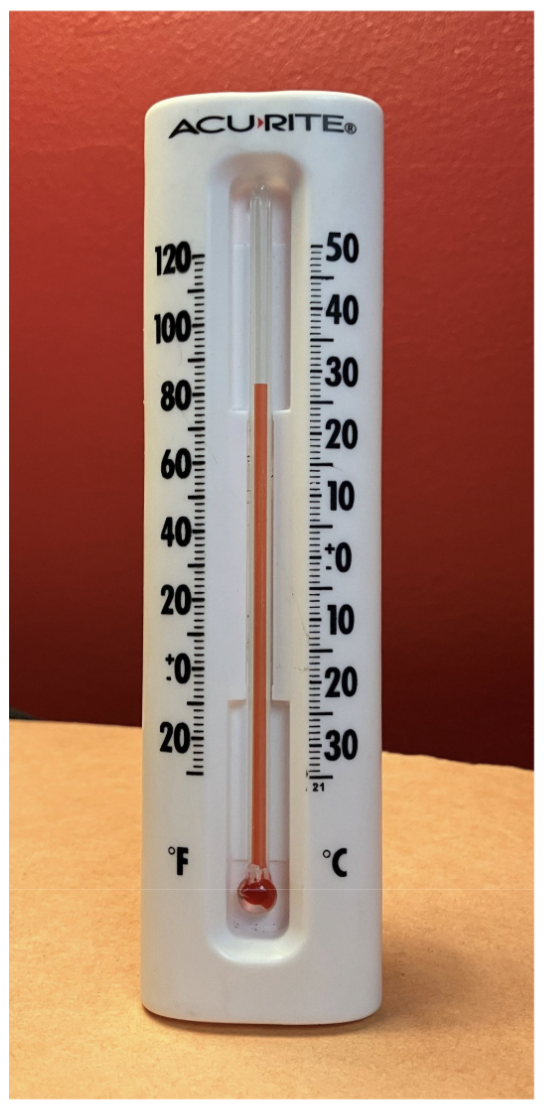
An alcohol thermometer provides a good analogy for sea level rise from thermal expansion. An alcohol thermometer consists of a clear tube containing alcohol (often colored red to make it easier to see). Like water and many other materials, alcohol expands when it is heated. The tube constrains how the alcohol can move when it expands so that the only way it can move is up. The thermometer is calibrated so that you can read the rise in temperature that corresponds to thermal expansion from a particular temperature change.
The ocean is constrained by its basin, so when the ocean surface absorbs heat from the atmosphere and expands, the only way it can move is up. This is how heating the ocean leads to a rise in sea level.
Learn more in this video: Thermal Expansion and Sea Level Rise
Extensions
CoCoRaHS Extension Ideas:
Find a nearby river. Are the banks of the river steep, or are they very flat? Ask for a topographic map of the area with the river at your local library, and map out on it what would happen if the water levels rose by 1 foot; by 5 feet. What would happen to the community surrounding the river? Historically, river beds do flood, on average every 10 years, 50 years, or 100 years. Are there any historical records of flooding on your river? How high did the river rise? What would happen if the flood happened again this year?