


Overview
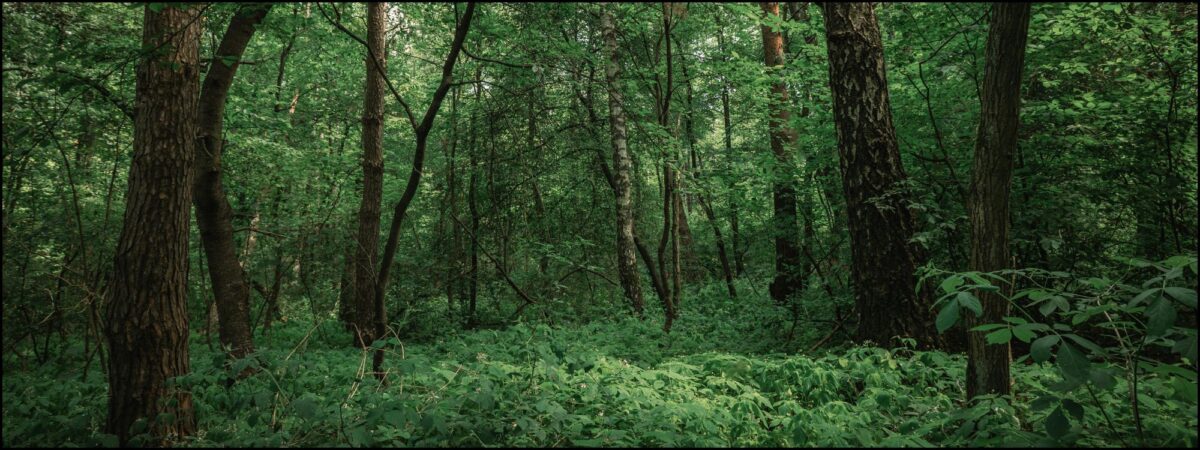
Tree rings can record aspects of climate as they grow. Each year, a tree grows a new ring as it gets thicker and grows taller. The thickness of the ring is dependent upon the climate conditions during the summer; a better growing climate for the tree results in thicker rings, while a poor growing climate for the tree results in thinner rings. Tree cookies are thin slices of a tree trunk. They expose the growth rings produced by the tree during its life.
Introduction
This activity provides information on how scientists use ‘proxy’ information, like that from tree rings, to learn about ancient climates.
Grade Level
K-5, 6-8
Learning Objectives
Students will be able to explain the methods of recording climate in the past using proxies like tree rings.
Lesson Format
This activity can be done indoors!
Time Required
1 hour
Credits & Contact Info
Trisha Smrecak and Caroline Boyajian
Paleontological Research Institution, 1259 Trumansburg Rd., Ithaca NY 14850
climate@priweb.org
Instructions & Materials
Instructions
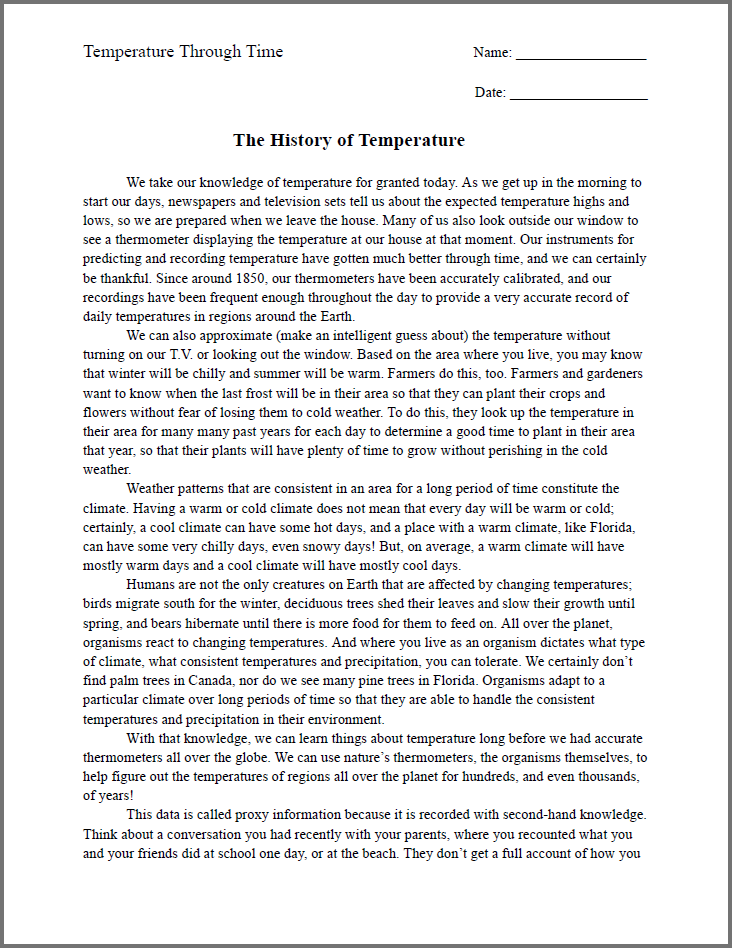
- Hand out the History of Temperature handout to the youth and ask them to read it alone or in groups.
- Bring the group together and discuss what they learned from the handout. Did they find out anything new or exciting?
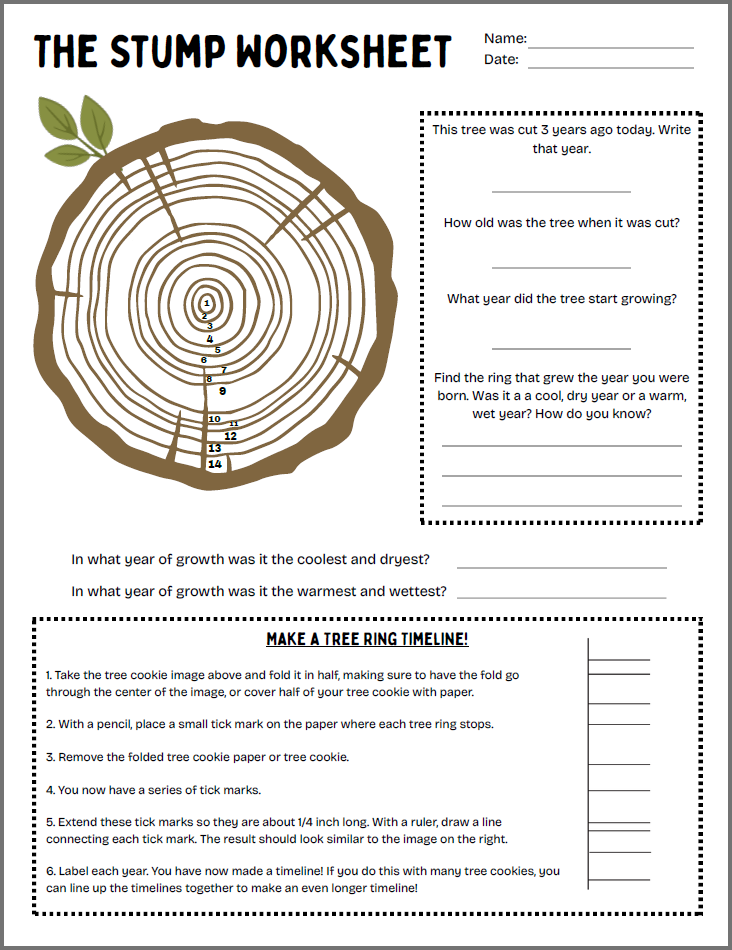
- Hand out the Stump worksheet to the youth. If you have your own tree cookie, you can use it in place of the one on The Stump worksheet.
Discussion
Scientists can learn about past climate from studying tree rings. While tree rings alone cannot tell the entire story, knowing about what types of environments different trees lived in helps to put the rest of the story together. Specifically, when trees live near the edge of their habitat range, they are more susceptible to changes in temperature and precipitation. When multiple trees from multiple habitats across the globe are studied, climate reconstructions from trees tell an amazing story of the history of Earth’s climate. With data from other forms of proxy evidence such as fossils in sediments at the bottom of the ocean, ice from glaciers, and fossil leaves and clams, climate scientists have been able to reconstruct Earth’s climate over hundreds of millions of years!
Discussion Questions:
- How does knowing about climate and climate change in the past put today’s climate change in perspective?
- You might discuss comparisons of magnitudes and rates of change (for example, human-induced climate change today is happening much faster than climate change during other times in Earth’s history).
Teaching Tip
You may want to tell students that scientists can extract tree ring data from living trees without having to cut the trees down. Scientists do this by using an instrument to bore into a tree and pull out a thin core of wood. This does not harm the tree, just like tapping sugar maple trees for sap doesn’t harm these trees.
Extensions
CoCoRaHS Extension Ideas:
Because CoCoRaHS volunteers and the data collected by them record weather, and because not all areas have had CoCoRaHS volunteers long enough to estimate a climate trend for your region, compare data that has been collected by CoCoRaHS volunteers in your area to a Farmer’s Almanac of your area. Farmer’s Almanacs can be found in your local library and record daily weather for years. Observe similarities and differences. In what ways would a Farmer’s Almanac be useful?