


Overview
Many forces come together to create rain in our community, including moisture in the air (humidity), warm temperatures that keep rain from turning to snow, and winds that bring clouds and low-pressure systems together to create a storm. Does it rain often in a desert? No, because even though it is warm enough, there isn’t enough humidity in the air. Does it rain often at the North Pole or in other Arctic areas? No, because even if the air is humid, it falls as snow rather than rain.
Introduction
This activity will show us some of the basic forces acting together to create rain.
Grade Level
K-5, 6-8
Learning Objectives
Students will be able to discuss that rain is a part of the water cycle and recall the physical forces that allow rain to fall.
Lesson Format
This activity can be done indoors!
Time Required
45 minutes
Credits & Contact Info
Trisha Smrecak and Caroline Boyajian
Paleontological Research Institution, 1259 Trumansburg Rd., Ithaca NY 14850
climate@priweb.org
Instructions & Materials
Materials
- Empty, clean glass jar (like a pickle or jam jar)
- Disposable pie pan
- 6-8 ice cubes
- Hot water
Instructions
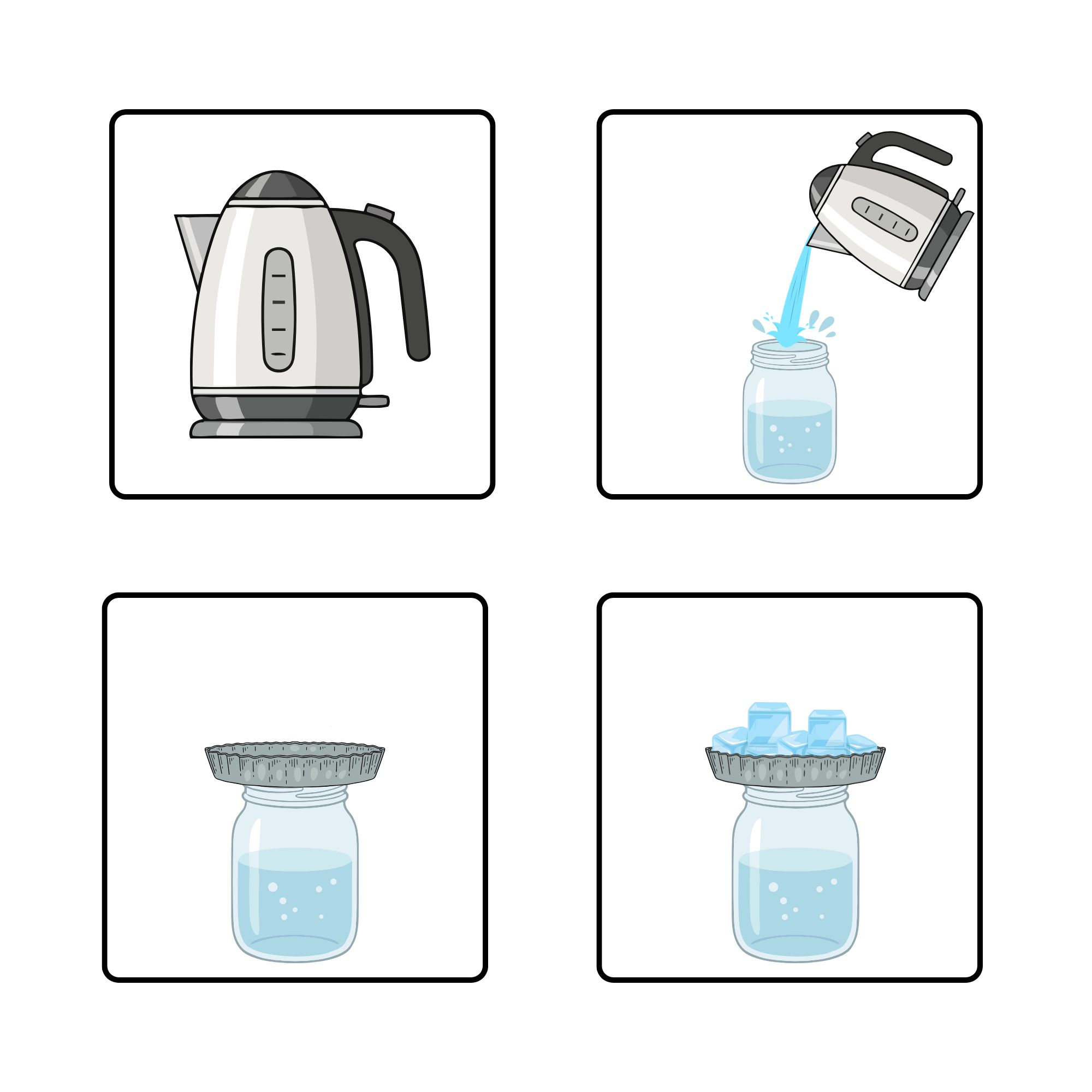
- Pour hot water (NOT BOILING WATER) into the glass jar and cover it with the pie pan (right-side up).
- Let sit for approximately one minute. What’s happening inside the jar?
- Place the ice cubes into the pie pan and watch what happens inside the jar. Now what is happening in the jar?
Discussion
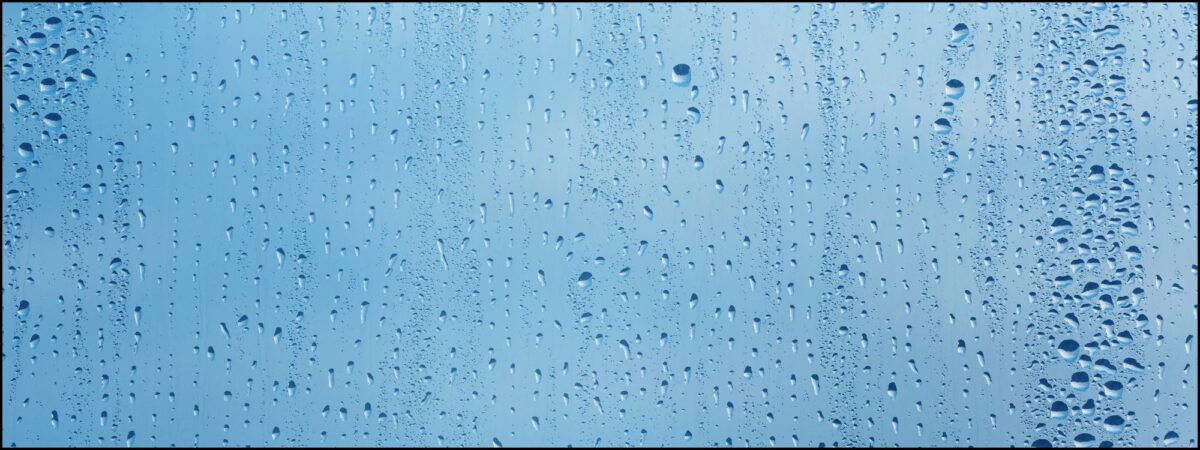
In this activity, the hot water warmed the air inside the jar, allowing the air to expand and carry moisture in it. Think about feeling steam rise as you boil water for dinner. The moist air is trapped inside the jar by the pie pan, and when the ice is placed in the pie pan, the air in the jar is cooled. Cold air cannot hold as much moisture as warm air, so the water condenses on the pie pan and the sides of the jar, forming droplets. These flow down the side of the jar, creating “rain.” In the same way, warm, moist air from the Earth rises into the atmosphere, where eventually it is cooled, condenses, and creates clouds and rainfall.
When the hot water was poured into the jar and the pie pan was placed on top, the jar became opaque and hard to see through. This is the same process by which clouds and fog are formed. If we envision the jar as the Earth and atmosphere, the cloud formation is in the upper atmosphere. If we envision the top of the water as the Earth's surface, the cloud formation represents fog, which occurs when the conditions for cloud formation exist at the Earth’s surface.
Discussion Questions:
- Why are droplets forming on the pie pan?
- Why is there water trickling down the side of the jar?
Teaching Tip
To get rapid formation of a “cloud” in the jar, it may help to light a match and hold it in the jar for a few seconds before covering the jar with the pie plate. The smoke particles generated by lighting and burning the match provide nucleation sites (particles for water molecules to attach to).
Extensions
CoCoRaHS Extension Ideas:
Think about the characteristics of your community as you make rainfall observations for CoCoRaHS. What does it feel like in the hours before a rainfall? Is it warm? Do your clothes feel like they are sticking to you because the air is so moist? What does it mean when someone describes the air as thick? Record these observations, too, as you record your precipitation data for CoCoRaHS on your data sheet.